New Jersey's Sand Crisis: Beach Replenishment & Federal Funding
New Jersey's Sand Crisis: How Federal Funding Battles Are Reshaping the Shore
For the first time in nearly 30 years, routine federal beach replenishment funding froze. Here's the full story — and what it means for New Jersey's $45B coastal economy.
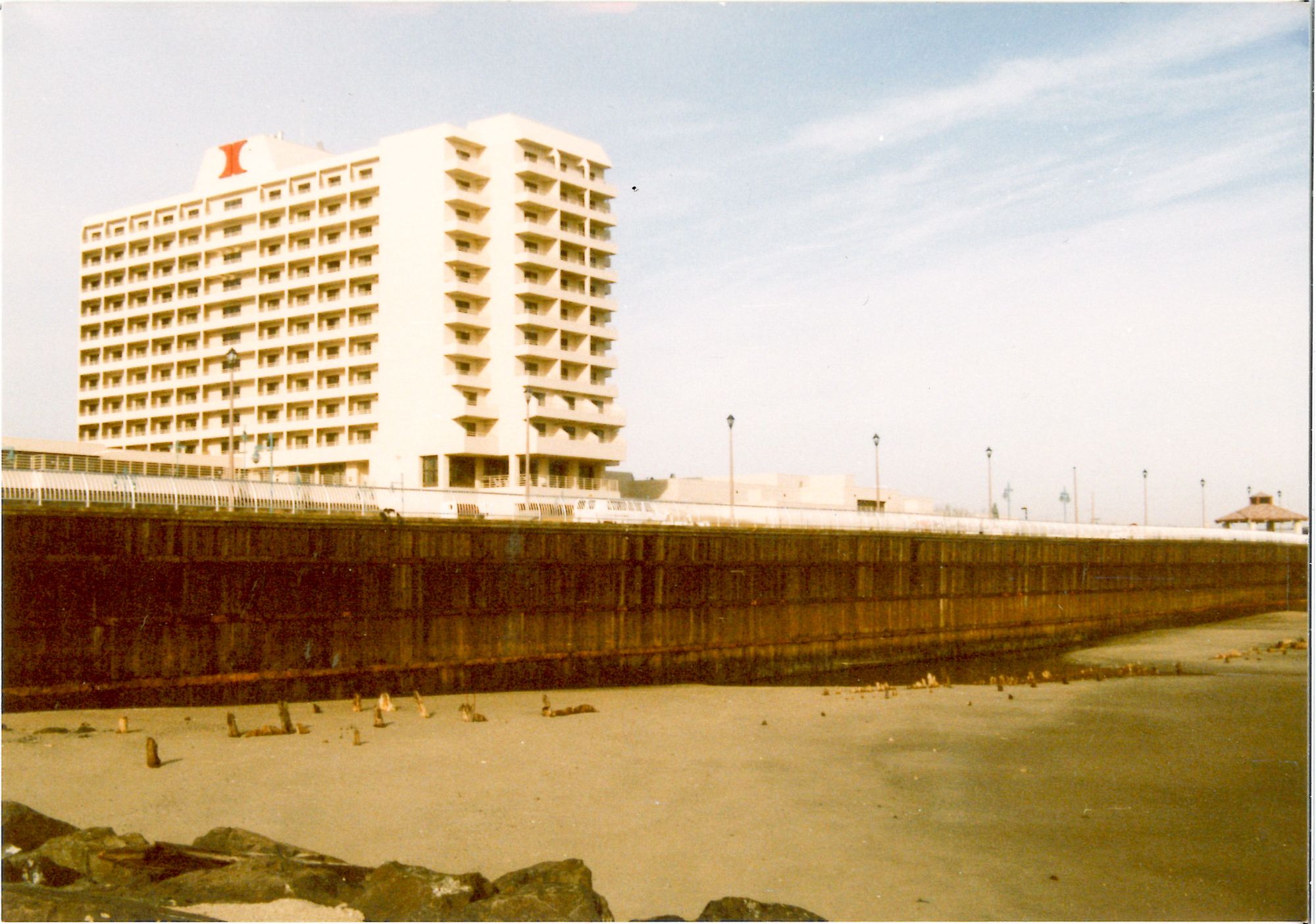
There's an old saying among Jersey Shore real estate professionals: the beach doesn't just sell itself — it is the sale. The moment a buyer spots that first glimmer of ocean from the balcony, the deal is as good as done. But what happens when the beach starts disappearing?
That's not a hypothetical. Over the past twelve months, New Jersey's coastline has been caught in the crossfire of a federal funding war — one with very real consequences for the $45+ billion tourism economy that depends on a healthy shoreline. Think of New Jersey's beach replenishment system like a treadmill: the ocean constantly strips sand away, and the program constantly pumps it back. In 2025, for the first time in nearly three decades, someone hit the stop button.
Here's the full story of how it happened, who stepped in, and what comes next for one of the most economically vital coastlines in the United States.
The System That Kept New Jersey's Beaches Alive
To understand what's at stake, you have to understand how beach replenishment actually works. It's not a one-time fix — it's a permanent maintenance relationship between the federal government, the State of New Jersey, and local shore communities.
For roughly 30 years, the U.S. Army Corps of Engineers (USACE) operated on a consistent cost-sharing formula: the federal government covered approximately 65% of initial beach nourishment costs, with the state and local municipalities splitting the remaining 35%. On a cyclical basis, dredges would pump millions of cubic yards of sand onto eroded beaches, rebuilding the protective berms that shield coastal properties from storm surge.
Federal officials have long cited data showing that every dollar spent on pre-disaster coastal mitigation saves an average of six dollars in post-disaster cleanup costs. A healthy berm absorbs storm energy before it reaches boardwalks, roads, and the multimillion-dollar properties that line the shore.
By 2024, New Jersey's beaches had become a finely tuned system — 127 miles of coastline that generated enormous tax revenue and drove property values that rival some of the most competitive markets on the East Coast. Then came 2025.
Phase 1 · July 2025 The Sand Drought — When the Federal Tap Ran Dry
In July 2025, the Trump administration executed a sweeping shift in federal budget priorities that effectively "zeroed out" routine cyclical funding for several of New Jersey's scheduled beach fill projects. The decision landed without warning on communities that had already baked federal cost-sharing into their long-term planning.
For the first time since the early 1990s, the regular sand-pumping operations ground to a halt.
The towns hit hardest were among the Shore's most beloved: Ocean City, Avalon, and Stone Harbor — all in Cape May County, all heavily dependent on beach width for their tourism identity and property tax base. Avalon, facing severe winter and spring erosion that had carved dramatic cliffs into its dune system, was left with no federal partner. Local officials made an emergency decision to spend municipal tax dollars on stopgap measures — scraping and trucking roughly 40,000 cubic yards of sand to shore up the worst-affected areas. It worked, barely. But it was an expensive, temporary solution to what is a permanent geological problem.
"Without federal cost-sharing, municipal tax hikes are no longer a political talking point — they're a mathematical inevitability."
The advocacy response was swift. The Jersey Shore Partnership, New Jersey's leading coastal advocacy organization, launched public campaigns framing beach replenishment not as a beach amenity, but as critical infrastructure — no different than maintaining a levee or a highway. Democratic lawmakers including Rep. Frank Pallone hammered the administration publicly, warning that the false economy of cutting replenishment funding would ultimately cost taxpayers far more when the next significant storm made landfall on unprotected coastline.
Phase 2 · Late 2025 – Early 2026 The Legal Battle — FEMA's BRIC Program Under Siege
In parallel with the Army Corps funding freeze, the administration turned its attention to FEMA's Building Resilient Infrastructure and Communities (BRIC) program — a pre-disaster mitigation grant program that New Jersey had been leveraging heavily for flood protection and shoreline engineering.
The administration moved to fundamentally restructure or terminate BRIC. New Jersey was not going to take that quietly.
New Jersey joins 21 other states and Washington, D.C., in a lawsuit to block the administration from halting pre-disaster mitigation funds.
A federal judge issues an order prohibiting the administration from shutting down the BRIC program.
NJ officials return to court, accusing the administration of ignoring the court order and continuing to withhold funds.
FEMA opens applications for a restructured $1 billion BRIC program — with narrower eligibility, but funding is preserved.
The message from Washington was clear: the federal government would remain a funding partner, but it would increasingly expect states and municipalities to carry more of the weight.
Phase 3 · February 2026 The Army Corps Gets a Corporate Makeover
On February 23, 2026, Trump-appointed Assistant Secretary of the Army for Civil Works Adam R. Telle announced a sweeping internal restructuring of the U.S. Army Corps of Engineers under an initiative called "Building Infrastructure, Not Paperwork" (BINP).
The initiative introduced 27 policy reforms aimed at slashing regulatory red tape, accelerating permitting timelines through technology, and empowering district commanders to take "informed risks" to deliver projects faster and more cost-effectively.
If the old Army Corps was like a regional bank that made loans to anyone with a reasonable project, the new BINP model is more like a private equity firm — focused on the highest-return national investments, with smaller community projects left to find funding elsewhere. For New Jersey's shore towns, routine non-emergency replenishment would now compete in a much tougher national funding arena.
BINP's underlying directive was strict national prioritization — meaning Army Corps resources would increasingly flow toward high-value, high-commerce national infrastructure projects, like deepening the NY/NJ shipping channels, rather than smaller, localized beach fill operations.
Phase 4 · April 2026 The $99 Million Breakthrough — Disaster Funding to the Rescue
Here's where the story takes an unexpected turn.
Faced with a frozen routine budget and a restructured Army Corps with different priorities, New Jersey's South Shore delegation found a workaround — and it worked spectacularly.
On April 6, 2026, Congressman Jeff Van Drew (R-NJ) — a close Trump ally and arguably the most important Republican voice for the Jersey Shore's coastal interests — announced a $99 million federal investment from the U.S. Army Corps of Engineers for South Jersey beach replenishment. It is the largest single federal beach investment in New Jersey history during a year without an active hurricane landfall.
The $99M is being expedited by the Army Corps for updated engineering designs, coastal surveys, and dredging contracts across Ocean City · Strathmere · Sea Isle City · Avalon · Stone Harbor.
How was it secured? By pivoting away from the frozen routine replenishment budget entirely, and instead lobbying the administration to classify the deterioration — caused by severe storm damage and unprecedented erosion cliffing — as qualifying for emergency disaster infrastructure funding reallocations. It was a creative legal and political maneuver, essentially rerouting money through a different federal pipeline when the usual faucet was shut off.
The Uncomfortable Question: Is This a Model or a Miracle?
The $99 million win is genuinely significant. But as a long-term funding strategy, relying on disaster-classification workarounds is a precarious approach — and most honest observers on both sides of the aisle will acknowledge that.
If your home's roof is leaking, there's a big difference between scheduling a routine maintenance repair and waiting until the ceiling collapses so your homeowner's insurance kicks in. The insurance model is more expensive, more disruptive, and depends on something going dramatically wrong before help arrives.
Emergency funding only flows when erosion is severe enough to qualify as a crisis. That threshold creates a perverse incentive for communities to allow beaches to deteriorate to emergency levels rather than proactively maintain them, which is precisely the opposite of the approach that saves taxpayers money over time.
New Jersey lawmakers appear to understand this. Legislators are actively pushing the Coastal Trust Fund Act, which would establish a permanent, dedicated state-level funding stream for beach maintenance — one designed to insulate coastal communities from future federal budget battles. Several shore towns are also studying dedicated tourism and hotel taxes as mechanisms to fund beach maintenance at the municipal level.
For a Shore real estate professional, this is a meaningful data point: a beachfront community with a sustainable, locally funded beach maintenance program is a fundamentally different investment proposition than one perpetually dependent on federal appropriations that shift with every administration.
What This Means for Shore Real Estate
The Jersey Shore generates over $45 billion in annual tourism revenue and employs hundreds of thousands of New Jersey residents. Beach width isn't just an aesthetic preference — it's a measurable driver of property values, rental rates, and municipal tax bases. Studies have consistently shown that every foot of beach width above a threshold has a quantifiable positive effect on nearby property prices.
The volatility introduced by the 2025 funding freeze should give any serious Shore investor or buyer pause. Not because the beaches are disappearing, but because the funding mechanisms that maintain them are less predictable than they were a year ago. The good news: the $99 million emergency allocation demonstrates that political will to protect these coastlines remains strong across party lines.
The caution: a one-time emergency allocation is not the same as a reliable annual program. Until New Jersey has either restored the federal routine cost-sharing framework or built a robust state-and-local alternative, the shore's long-term sand supply remains a policy variable — and policy variables make real estate fundamentals uncertain.
The Bottom Line
New Jersey's beach replenishment story over the past twelve months has been one of disruption, legal battle, creative workaround, and hard-won partial resolution. The $99 million secured in April 2026 is a genuine victory for South Jersey's coastline — but it was achieved through emergency reclassification rather than sustainable policy, and it doesn't yet address the systemic question of how the Shore's sand supply gets funded when routine federal pipelines are frozen.
For policymakers, the answer lies in passing the Coastal Trust Fund Act and building a resilient state-level alternative. For local communities, it means having honest conversations about tourism taxes and municipal contributions before the next funding gap arrives.
And for anyone with skin in the game along the Jersey Shore — whether you own property there, sell it, or simply love it — the most important thing you can do right now is pay attention. The beaches aren't just sand. They're the foundation on which billions of dollars in economic activity, property value, and community identity rest. When that foundation erodes, everything built on top of it is at risk.
The ocean doesn't negotiate. The best we can do is plan ahead — and fund accordingly.
https://njclimateresourcecenter.rutgers.edu
Questions About Shore Market Conditions?
Coastal policy changes directly impact property values along the Jersey Shore. If you're buying, selling, or investing, this is exactly the kind of market intelligence that matters.
Get in Touch with RyanRecent Posts